
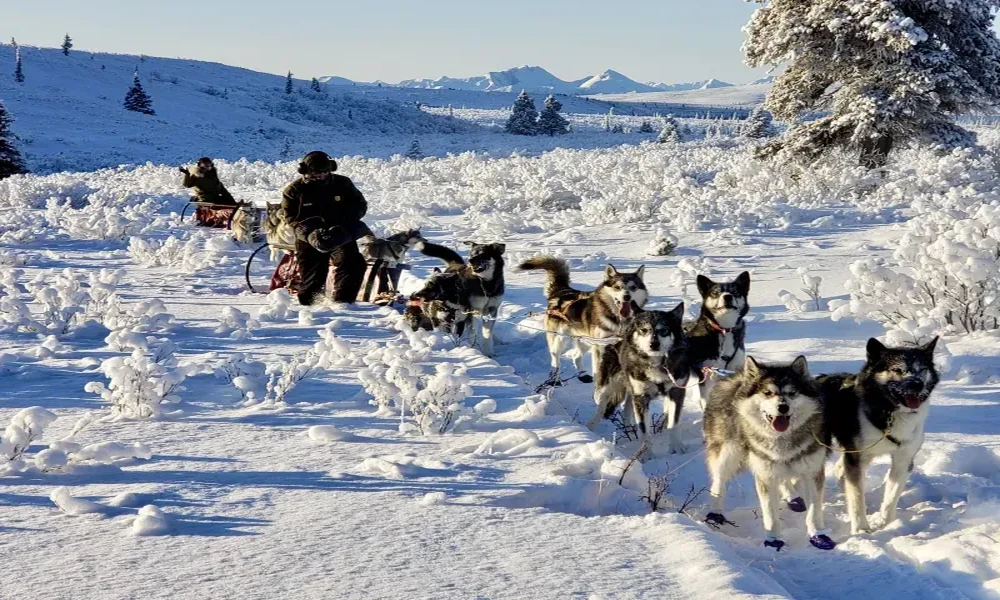
Few images capture Alaska quite like a team of dogs racing across snow. Long before roads and airplanes reached much of the state, sled dogs were essential for travel, hauling supplies, and delivering mail. Today, dog mushing remains a cherished part of Alaskan identity, celebrated through races, working kennels, and visitor experiences.
For many visitors, meeting sled dogs becomes a highlight of the trip. Whether exploring on an Alaskan cruise or a land tour through the Interior, there are opportunities to see working dogs, hear from mushers, and learn about this unique tradition. Here is an introduction to sled dog culture and how to experience it respectfully.
A Long History on the Trail
Alaska Native peoples used dogs for transportation and hunting long before outsiders arrived. During the gold rush era, dog teams became even more important, carrying people, freight, and mail across vast, frozen distances. In many remote areas, dogs remained the main form of winter transport well into the twentieth century.
The 1925 Serum Run
One of the most famous chapters in mushing history took place in 1925, when relays of mushers and dog teams carried diphtheria serum across hundreds of miles to the town of Nome during an outbreak. The effort drew national attention and helped cement the image of sled dogs as heroes of the North.
The Iditarod and Modern Racing
Today, long-distance sled dog racing is a major sporting tradition in Alaska. The best-known event, the Iditarod, follows a route across the state to Nome and honors the history of the historic trail. Other races, both long and short, take place throughout the winter and draw passionate local followings.
What Makes a Sled Dog
Most racing and working sled dogs are Alaskan huskies, a type bred for performance rather than appearance. They tend to share a few key traits:
- Endurance: The ability to run long distances at a steady pace.
- Tough feet: Paws that handle cold, ice, and rough terrain.
- Cold tolerance: Thick coats suited to harsh winter conditions.
- Enthusiasm: A strong desire to run and work as part of a team.
Ways to Experience Mushing in Summer
Most visitors travel in summer, when there is little snow at lower elevations. Mushers have adapted with creative experiences.
- Kennel visits: Meet the dogs, see their training, and hear mushers’ stories.
- Wheeled cart rides: Dog teams pull carts along dirt trails.
- Glacier dog sledding: Helicopter tours bring visitors to summer snow on icefields.
- Puppy encounters: Many kennels let visitors meet young dogs in training.
National Park Sled Dogs
Denali National Park maintains a working kennel of sled dogs that help patrol and support the park’s wilderness in winter. In summer, rangers often offer demonstrations that explain how the dogs contribute to park operations. It is a great example of mushing as a working tradition, not only a sport.
Questions to Ask on a Kennel Tour
- How are the dogs trained and conditioned for racing season?
- What do the dogs eat to fuel long runs?
- How is each dog’s role on the team chosen?
- What happens to dogs after they retire from racing?
Choosing a Responsible Experience
Look for operators that emphasize dog welfare, explain their care practices openly, and give dogs plenty of rest. Clean facilities, healthy-looking animals, and knowledgeable handlers are good signs.
A Deeper Connection to the North
Learning about sled dogs offers a window into Alaska’s history, resilience, and community spirit. Whether meeting puppies at a kennel or watching a team at work, visitors come away with a richer understanding of the bond between people and dogs that helped shape the state.
You may also like
-
The First Few Months of Learning Golf, From Zero to a Handicap
-
Group Friendly Accommodation Offers Kamala Phuket for Shared Travel Adventures
-
Enjoy A Relaxed Tropical Getaway At Ananea Beyond Khaolak
-
3 Scenarios Where Hourly Cover Beats Daily Snow Sports Plans
-
Cutting Out the Travel Headaches with Small Group Journeys